
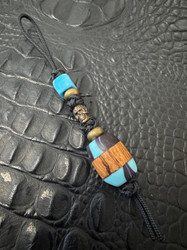
Knife Lanyard Knot Guide: The Best Knots for Attaching and Styling Your Lanyard
Posted by TangDanglers on Jul 16th 2026

There are a lot of ways to tie a knife lanyard — but some knots are more secure, more practical, and better-looking than others. Whether you're attaching a pre-made lanyard to your knife or building your own from scratch, knowing the right knots makes the difference between a setup that holds for years and one that unravels in your pocket.
Here's a breakdown of the most useful knife lanyard knots, what they're good for, and when to use each one.
The Larks Head Knot (Cow Hitch) — The Standard Attachment Knot
What it is: The larks head knot is the most common way to attach a lanyard to a knife. It's simple, self-tightening, and easily reversible if you want to swap lanyards.
How to tie it:
- Fold your lanyard in half so there's a loop at one end
- Push the loop through the knife's lanyard hole from one side
- Pass the bead end of the lanyard back through the loop
- Pull firmly — the knot cinches and tightens against the handle
Why it works: The larks head is a load-bearing hitch. The more tension on the lanyard, the tighter it holds. It can be removed in seconds when you want to swap to a different lanyard. All Tang Danglers lanyards are pre-finished with a loop at one end specifically for larks head attachment.
The Overhand Knot — Simple Stop Knot
The overhand knot is the most basic knot — it's what you tie before tying your shoes. In lanyard context, it's used as a stop knot to prevent cord from pulling through a hole or to anchor the end of a lanyard. A double overhand knot (tied twice) makes a solid stopper for DIY lanyards.
The Cobra Knot (Solomon Bar) — The Decorative Body Wrap
The cobra knot isn't an attachment knot — it's a decorative knot pattern used to build the body of a lanyard. Two strands of paracord are woven in alternating half-hitches around a core, creating the flat, rectangular weave that's become iconic in the EDC community. It adds both visual texture and grip — especially useful for deep pocket carry where you need a confident pull.

The Turk's Head Knot — The Decorative Accent
The Turk's head creates a woven ring or collar used as a decorative band around a cord or handle. In lanyard-making, it's often used as a collar around the attachment loop or as an accent between the knife handle and the main bead. It's an intermediate-difficulty knot that signals craftsmanship on higher-end handmade lanyards.
The Diamond Knot (Lanyard Knot) — The Finishing Knot
The diamond knot is a two-strand knot that creates a decorative knob — a large, symmetrical stopper knot that looks like a faceted diamond when finished. It's used at the tip of a lanyard as a clean, polished end rather than leaving raw cord ends exposed.
Which Knot Do You Actually Need?
For 95% of people, the only knot you need to know is the larks head — and even that takes about 30 seconds once you've done it once. The other knots on this list are for people who want to build their own lanyards or dial in the details of a custom build.
If you'd rather skip the knot-tying and get a great-looking, ready-to-attach lanyard, browse the Tang Danglers collection. Every lanyard ships pre-finished, pre-knotted, and ready to attach with a larks head through your tang hole.